

Wildflower Kit/Pollinator Kit
Pickup available at Ingleside
Usually ready in 2-4 days
Wildflower Kit/Pollinator Kit
Ingleside
12 Wilga Street
Ingleside NSW 2101
Australia
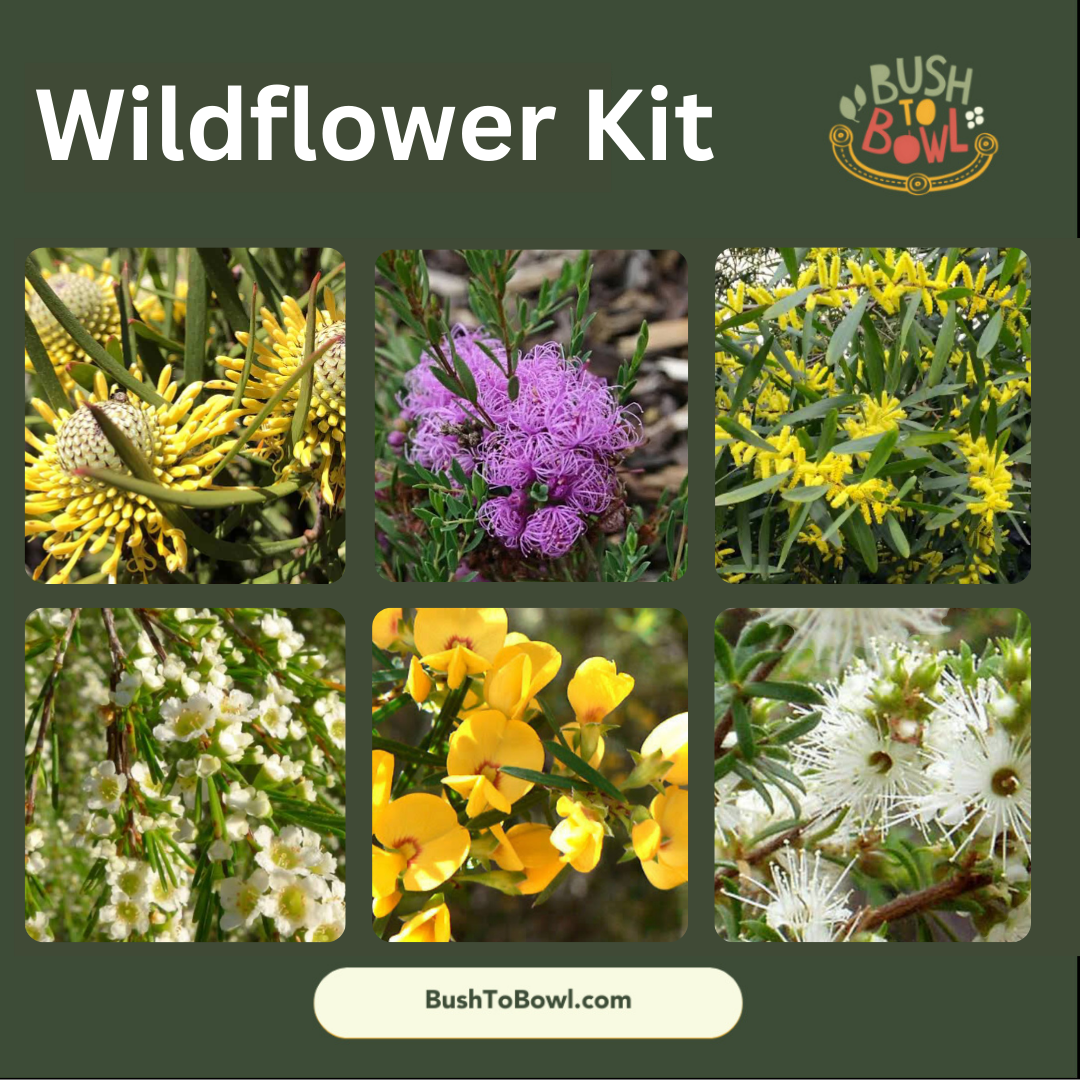
Wildflower & Pollinator Kit (Endemic to Sydney)
At Bush to Bowl, every plant we grow starts with a commitment to healthy stock and sustainable production practices. Our Wildflower & Pollinator Kit showcases a beautiful selection of plants endemic to the Sydney region, chosen to bring colour and fragrance to your garden while creating a thriving haven for native bees, butterflies and birds.
Please note: if a plant is out of stock, we’ll use our discretion to substitute a suitable alternative, and we’ll always make contact with you first to let you know about the change.
What’s in the Kit
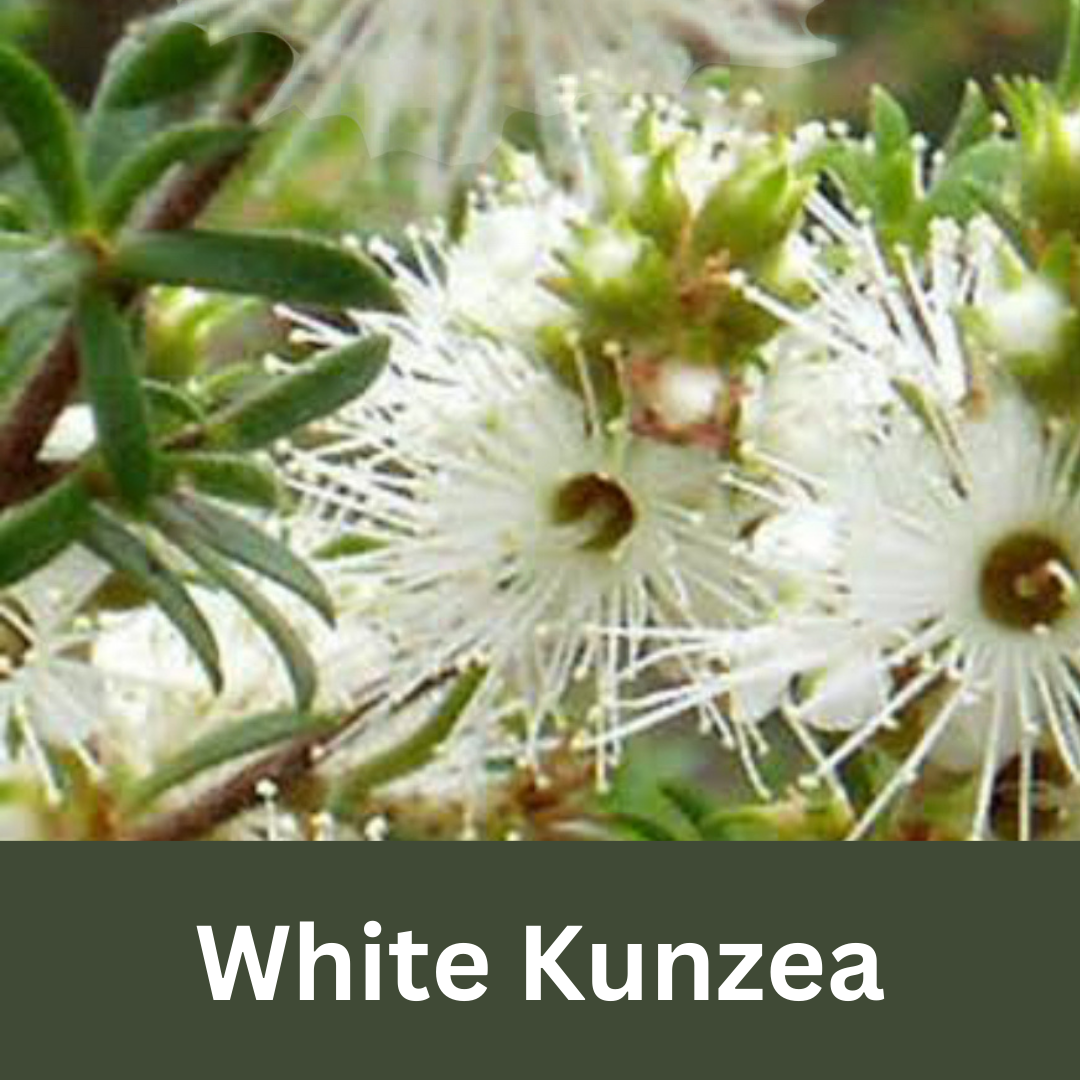
1. White Kunzea (Kunzea ambigua)
A hardy evergreen shrub with aromatic, needle-like leaves, growing 1–3 metres tall. From late spring to early summer it’s covered in small, fluffy white flowers that draw native pollinators from all around.
Uses: A wonderful screening plant or low hedge for native gardens. The mildly aromatic leaves can also be used in teas.
Care: Thrives in full sun to partial shade with well-drained soil. Water regularly until established and prune lightly after flowering to maintain shape. Tolerates both sandy and clay soils.
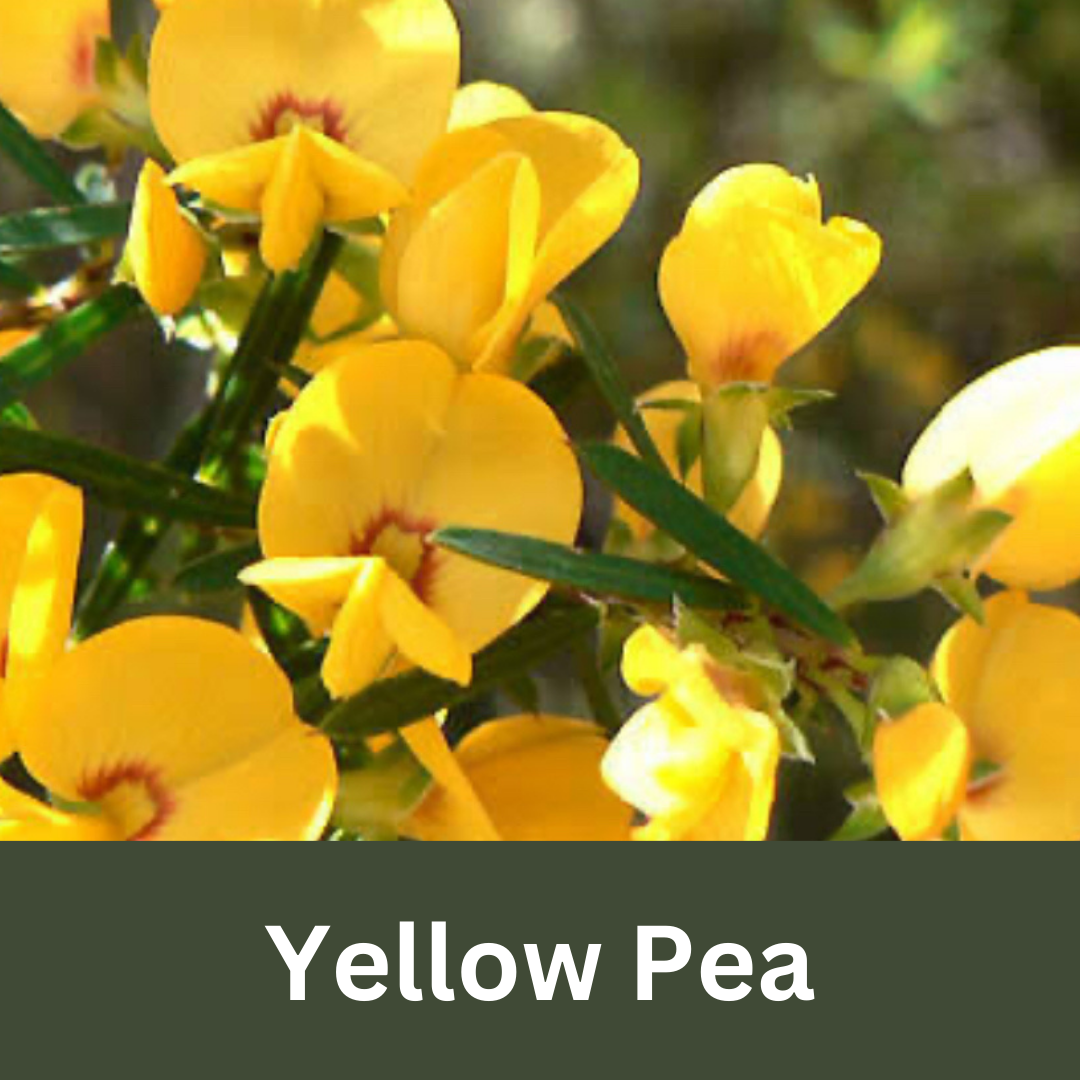
2. Yellow Pea (Pultenaea flexilis)
A compact shrub with flexible branches and narrow leaves, reaching 1–2 metres tall. In spring it produces clusters of yellow, pea-like flowers — an important nectar source for native bees.
Uses: Perfect for cottage-style native gardens, attracting pollinators and other beneficial insects.
Care: Prefers well-drained soil in full sun to light shade. Water during dry periods and prune lightly after flowering. Mulch well to retain moisture and suppress weeds.
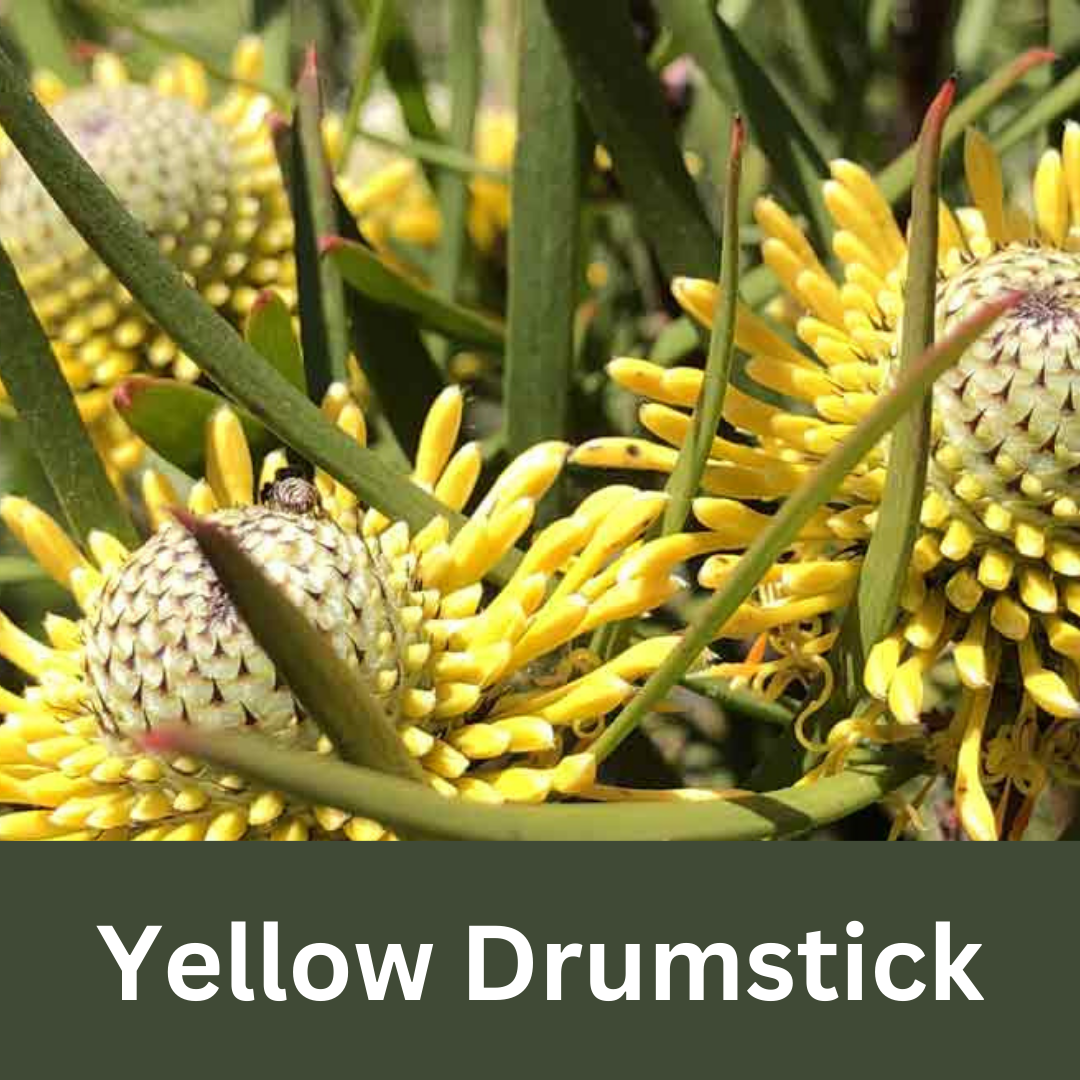
3. Yellow Drumsticks (Isopogon anethifolius)
A striking shrub with fine, needle-like leaves growing 1–3 metres tall. Bright yellow, drumstick-shaped flowers bloom through spring and summer, standing out beautifully in any native landscape.
Uses: Ideal for rockeries, native borders or as a feature plant. Its flowers provide a valuable food source for native birds and insects.
Care: Prefers sandy, well-drained soil in full sun. Water regularly until established and prune after flowering to encourage bushy growth. Well-suited to coastal conditions.
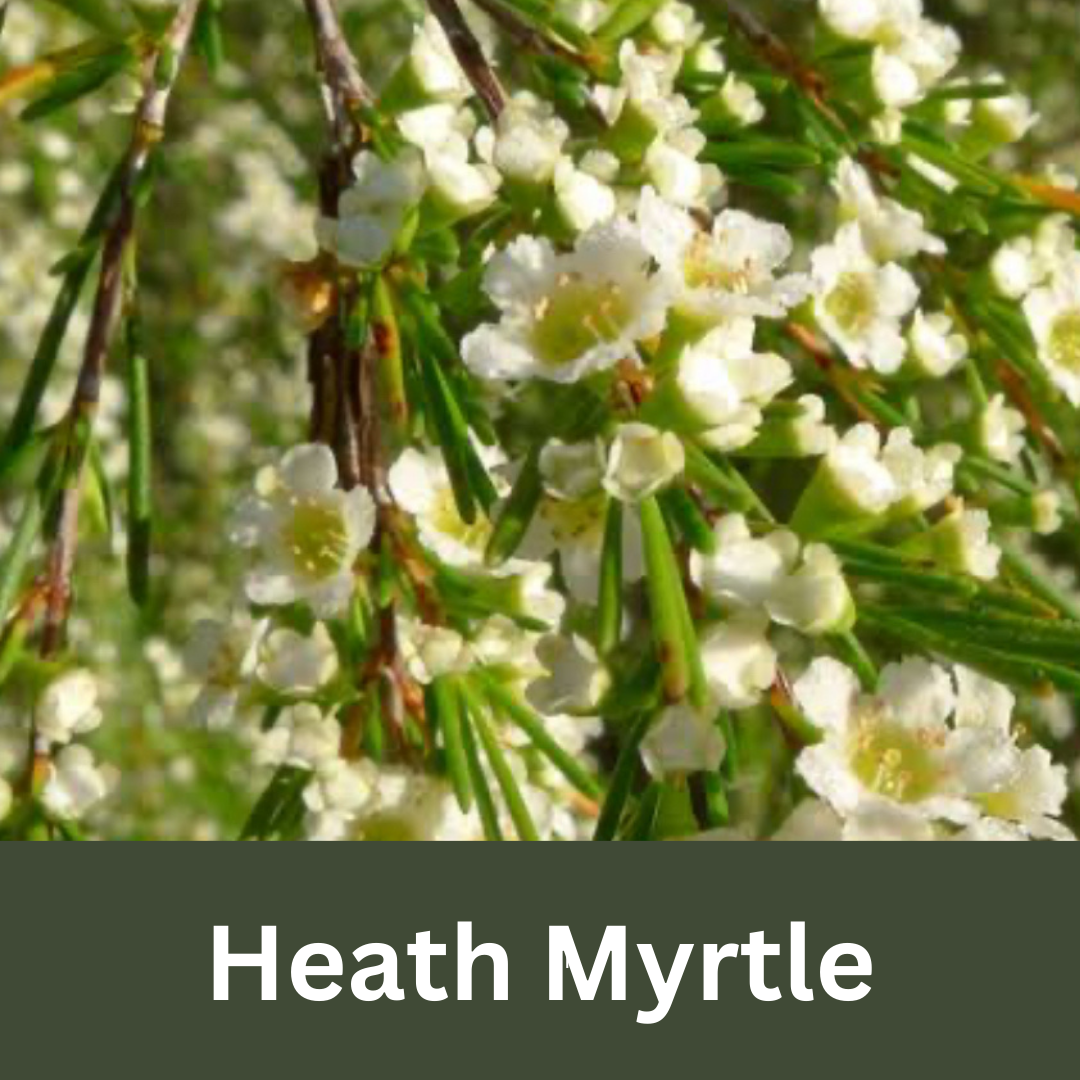
4. Heath Myrtle (Baeckea imbricata)
A dense, compact shrub with tiny aromatic leaves, growing 0.3–1 metre tall. Small white to pink flowers appear in spring and summer, giving the plant a soft, bushy appearance.
Uses: A lovely low-growing hedge or border plant that adds both texture and scent to the garden.
Care: Thrives in full sun to partial shade with well-drained soil. Water regularly while establishing and prune lightly after flowering to keep it compact. Adapts well to a range of soil types.
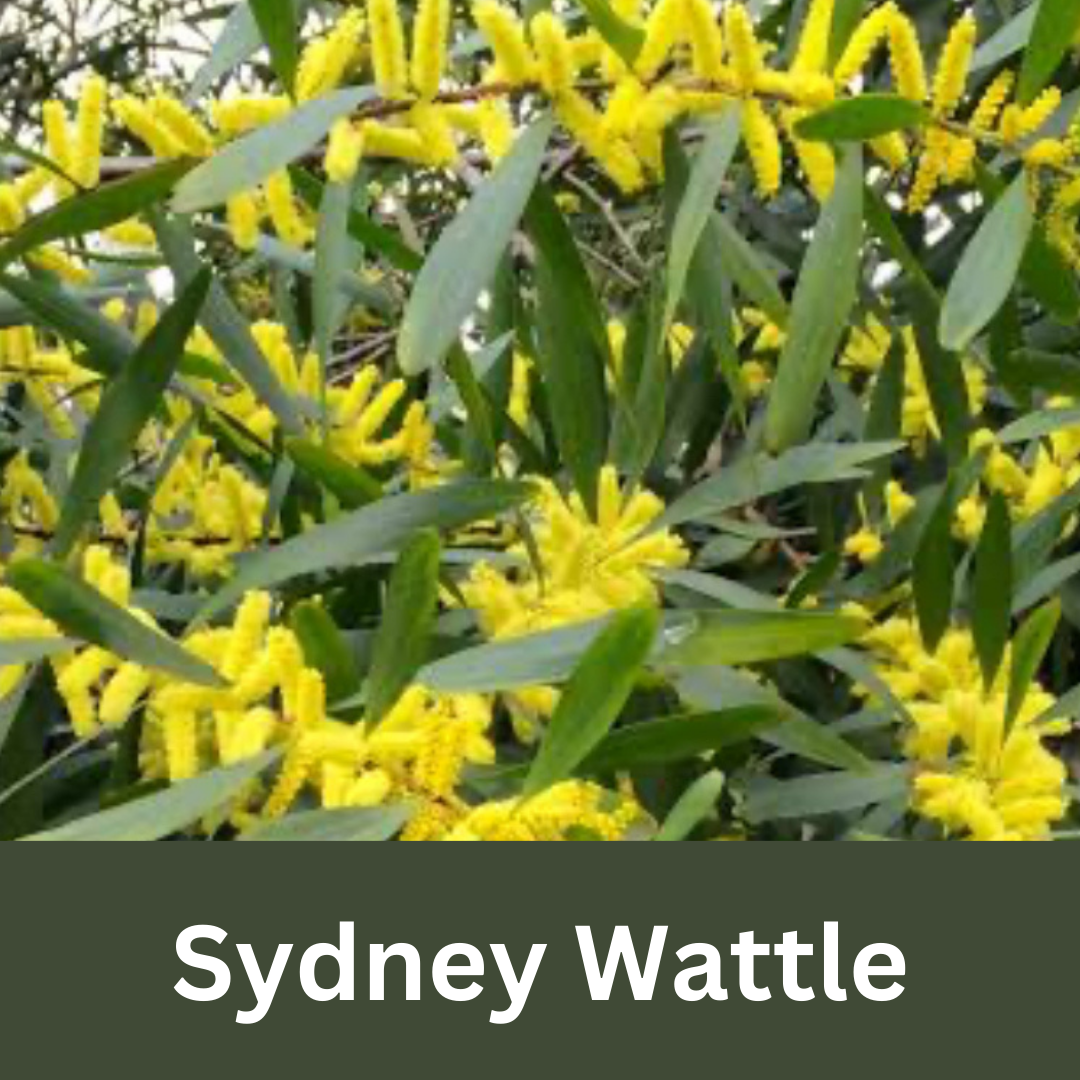
5. Sydney Golden Wattle (Acacia longifolia)
A fast-growing shrub or small tree reaching 3–10 metres tall, with bright yellow cylindrical flower spikes blooming from late winter to early spring — a stunning feature in any garden.
Uses: A nitrogen-fixing plant that helps improve soil health. Its flowers can also be used to make a light, honey-flavoured tea.
Care: Prefers full sun and well-drained soil but adapts to a range of conditions. Water until established and prune after flowering to manage size and shape.
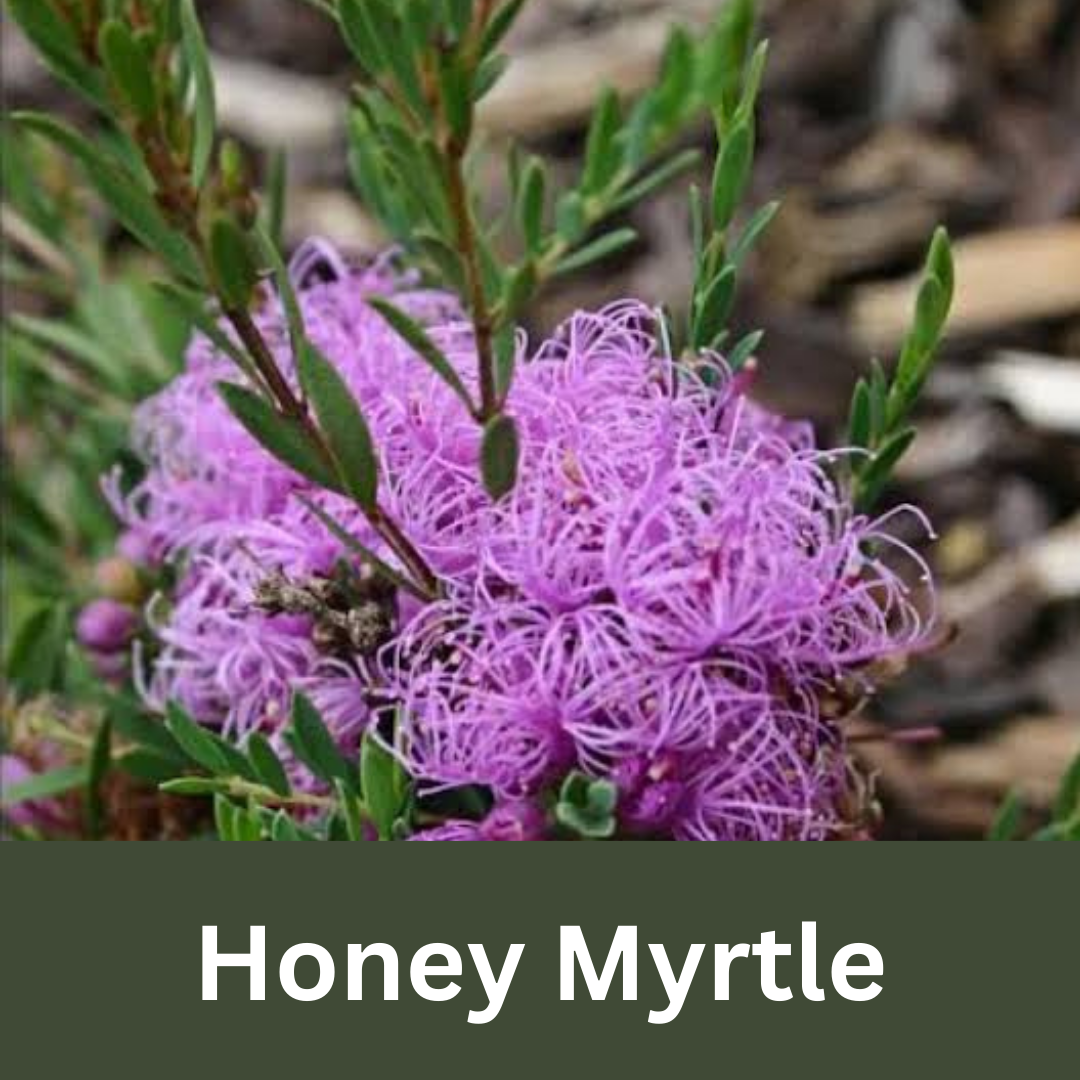
6. Honey Myrtle (Melaleuca thymifolia)
A small, hardy shrub with fine, thyme-like leaves, growing 0.3–1 metre tall. Purple, bottlebrush-like flowers appear in spring and summer, drawing in bees and butterflies.
Uses: A beautiful ornamental plant for gardens, hedges or containers, with lightly aromatic leaves.
Care: Grows best in full sun to partial shade with moist, well-drained soil. Water regularly, especially during dry periods, and prune lightly after flowering to encourage fresh growth. Mulch to retain moisture and reduce weeds.
Planting & Care Instructions
1. Prepare the planting area
Remove weeds, grass or debris from the planting spot. Loosen the soil to promote strong root growth and remove any large rocks or clumps.
2. Improve the soil if needed
If the soil is poor or compacted, work in organic matter such as compost to improve drainage and fertility.
3. Plant the seedlings
Dig a hole slightly wider and deeper than the root ball. Carefully remove the plant from its container and place it in the hole at the same depth it was growing before.
4. Backfill and water
Fill the hole with soil, pressing down gently to eliminate air pockets. Water deeply to help settle the roots, then add a layer of mulch around the plant to retain moisture and suppress weeds.
5. Ongoing care
Water regularly during the first year to help establish strong roots. Once mature, native plants generally require little maintenance, but will benefit from occasional watering in dry periods and light pruning after flowering.
%0AAt%20Bush%20to%20Bowl,%20every%20plant%20we%20grow%20starts%20with%20a%20commitment%20to%20healthy%20stock%20and%20sustainable%20production%20practices.%20Our%20Wildflower%20%26amp;%20Pollina...
)